New publication: Creative capacity building for early, mid-career and senior researchers

The expectations placed on sustainability researchers are very high. They are asked to deepen scientific knowledge while also fostering practical solutions and transformative change towards more regenerative ways of living. This dual responsibility can be very challenging given that the complexities associated with promoting sustained change on personal, political and systemic levels are difficult to address in most contexts. The field of sustainability transformation and regenerative futures is a quickly growing field in research and practice. It is evolving more and more into an inter and transdisciplinary field integrating many different disciplinary knowledges and other ways of knowing. Researchers are asked to collaborate across disciplines and lines of difference and bring together diverse parts of society to achieve shared understanding and collaborative action towards regeneration. Still, many institutions fail to provide continuous learning and training opportunities on transdisciplinary approaches and capacity building for researchers in the different career stages. Yet continuously developing one’s skills and competencies can be essential for academic success, personal growth, and a deep sense of meaning. 

Capacity building in a changing world

Capacity building for researchers working in the fields of global social-environmental challenges, including sustainability and regeneration, needs to ac- knowledge the complexities of their research settings. It may involve providing a broad palette of competencies and inspirations. Apart from developing skills in research methodologies, technical tools, and communication, it also needs to in- volve innovative, creative, and interdisciplinary approaches that can inspire new perspectives and ideas to address such complex problems. In addition, such capacity building needs to be tailored to the specific needs, challenges, and goals that researchers have at different stages of their career. 

This publication features the capacity building activities developed and promoted by Working Group 3 of the shift Cost Action, in the first two years of the Action, 2023-2024

Open Access publication here

COST Action Shift – Social Sciences and Humanities for Transformation and Climate Resilience aims to deepen our under- standing of practices involved in ‘doing transformation’ and to explore the role of transdisciplinary Social Sciences and Humanities in these emerging and evolving spaces. It fosters creative, future-oriented and tangible solutions to address the challenge of accelerating change in an inclusive and responsible manner. SHiFT brings together researchers and practitioners from different disciplines creating spaces for transdisciplinary networks and research in order to harness the potential of engaging with transformation and regeneration across different social, political, economic and environmental contexts.

Working Group 3—Creative 09 Practices, Arts and Outreach is led by Julia Bentz and Jelena Ristić Trajković. This working group is dedicated to exploring the arts outside conventional parameters of communication and outreach through traditional exhibitions and displays, but as a generator for knowledge production, climate action, and regenerative change. 
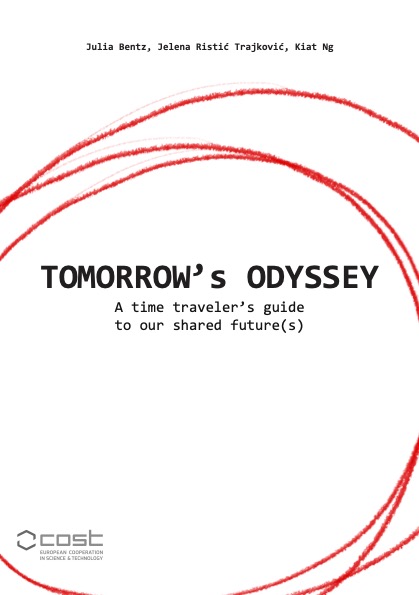
Collaborative book published: Tomorrow’s Odyssey – a time traveller’s guide to our shared futures

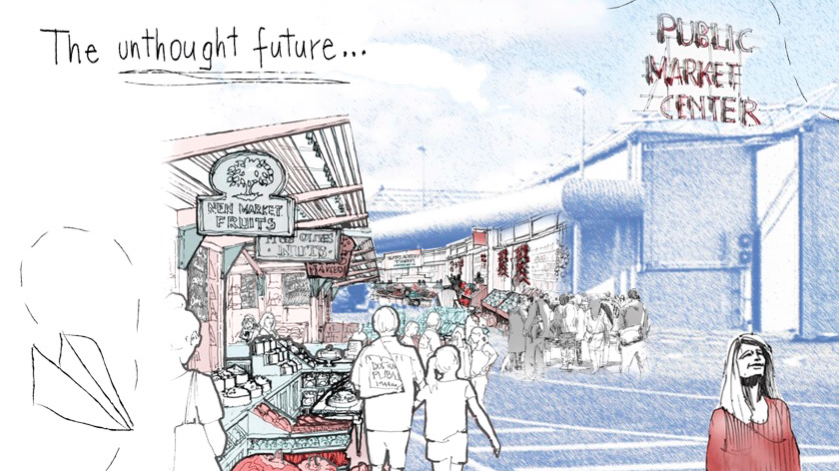
Have you ever wondered how cities will adapt to climate change and related challenges? Do your imaginings take a dystopian or utopian view? How do you imagine a city that you would LOVE to live in?

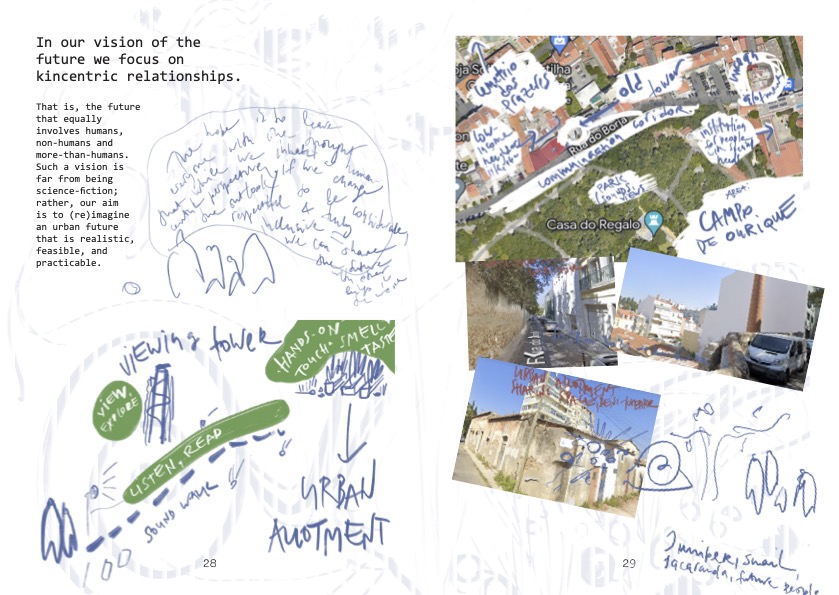
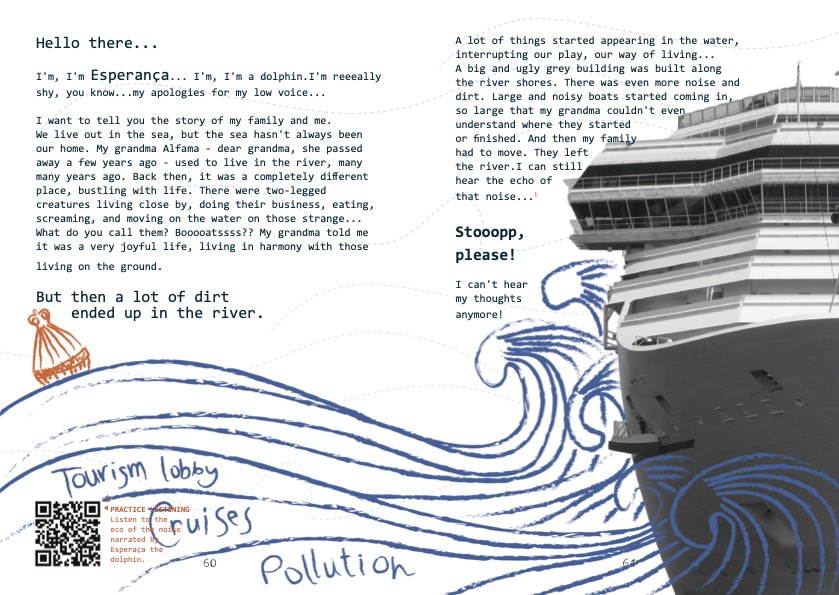
This book is meant to take you on a journey – an odyssey. It is an invitation to reflect, explore and reimagine the city through different lenses. Cities are tapestries of culture, science, art, history, diversity and innovation. At the same time, cities are hotspots of resource consumption, air pollution and greenhouse gas emissions. Yet, cities often are pioneers of more sustainable and equitable ways of living, while addressing air pollution, waste, mobility, housing and climate in a far more effective way than countries or provinces. For the world to thrive, cities are likely to be drivers of change towards regenerative living and being. They were once the birth of civilization. How can they be testing grounds for innovating and reimagining the urban space? What might a regenerative city look like and feel like? How do we harness the creative potential of cities to achieve regenerative futures for our planet?

This book is coauthored by the participants of the international summer school on “Urban Imaginary – Exploring our urban futures” and highlights the creative co-learning process, or odyssey, of the event. Hosted under COST action SHiFT – Social Sciences and Humanities for Transformation and Climate Resilience, the 5-day course took place in the National Museum of Science and Natural History and the Botanical Garden of Lisbon, Portugal, 3-7 July 2023. The summer school was conceptualized as a learning space that engaged cognitive and embodied knowledge and that nurtured both body and mind in a simultaneous and synergistic way. With a total of 48 trainers and participants of diverse disciplinary backgrounds coming from 20 countries (Europe and elsewhere), the summer school applied a transdisciplinary approach that allowed the trainers and participants to navigate between the many polarities, contradictions, and challenges around life in cities and to explore new, regenerative imaginaries of the future.


Open Access to the book here