
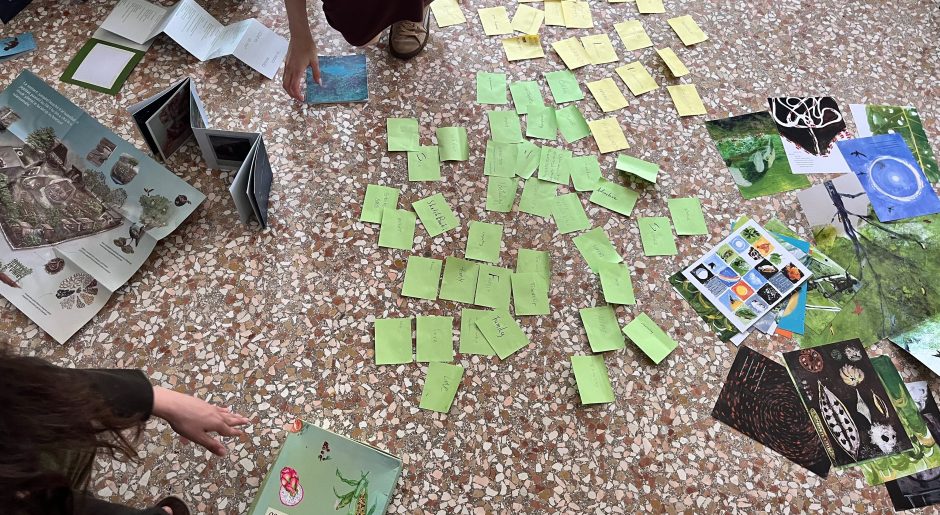
Creative Methods Toolkit For Imagining, Designing and Teaching Regenerative Futures
Imagining, designing and teaching regenerative futures is challenging. Educators often lack approaches that allow them to address the complexities of global challenges through new narratives, which make space for the imagination of desirable futures. Commonly in education, we retell the story of an apocalyptic future when speaking about global challenges such as biodiversity degradation and climate change. This narrative, which focuses on the risks and dangers of global environmental change, is built on the assumption that the induced fear might lead to action.
This toolkit introduces a broad variety of creative and arts-based methods for regeneration and transformation that can be used in various educational settings. It harnesses the power of creative and arts-based practices, which are increasingly seen as a means of expanding future imaginaries and supporting the development of new scenarios of transformative change.

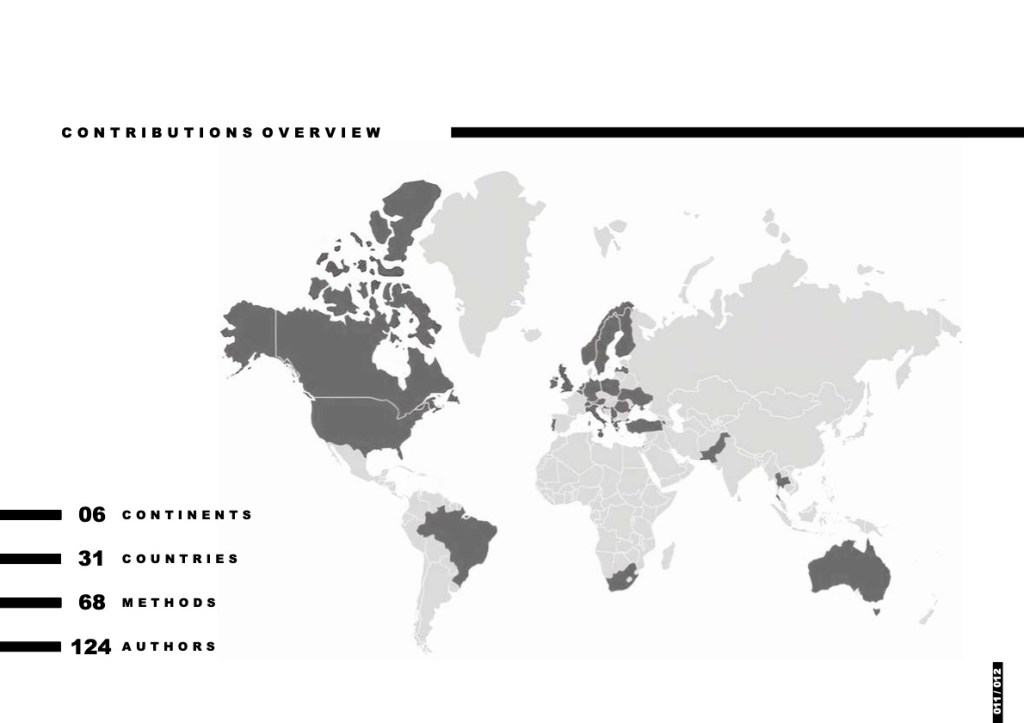
The toolkit was developed within the COST Action SHiFT – Social Sciences and Humanities for social transformation and climate change as an initiative of Working Group 3: Creative Practices and Outreach. It comprises a selection of 68 creative methods brought together in a collaborative effort by 124 authors from 31 countries and 6 continents. Its intention is to comprise a valuable resource for educators, teachers, lecturers, community workers, and change-makers who are aiming to empower their learners while providing competencies in regenerative design, climate action, futures thinking, human-nature connection, wellbeing and community engagement.
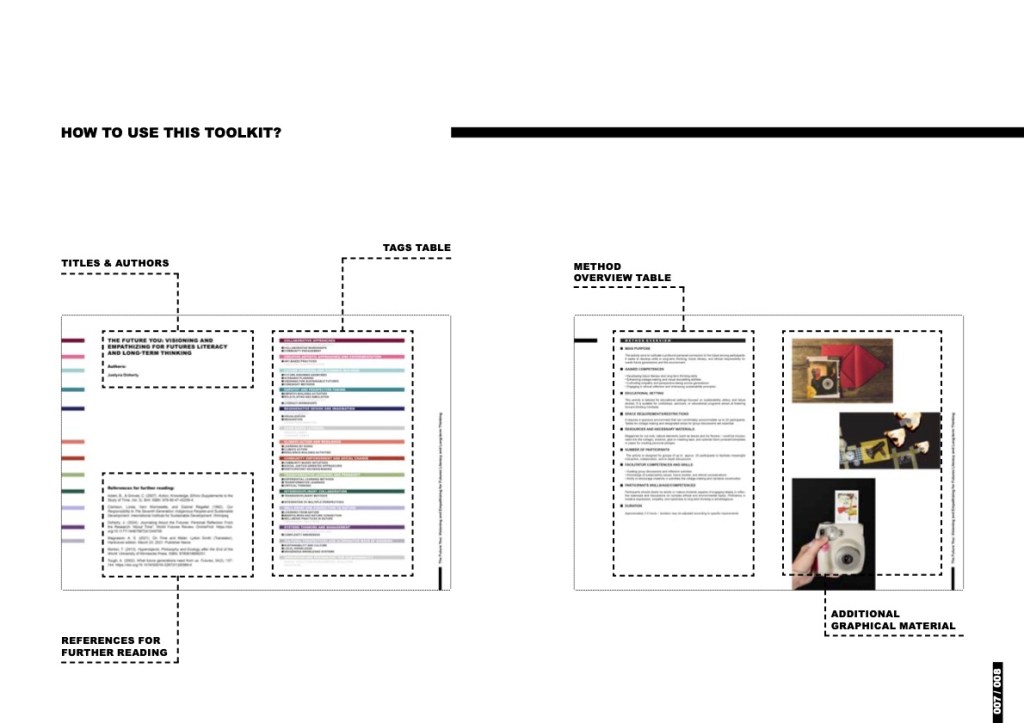
Designed with user-friendliness in mind, it facilitates navigating among different methods easily through tags and tables, supporting researchers and educators to identify suitable methods and tools for their specific context. It comprises a resource for researchers, educators, lecturers, community workers, and change-makers in the broadest sense, who wish to foster competencies in the areas of regenerative design, climate action, trans-formative research and sustainability education.
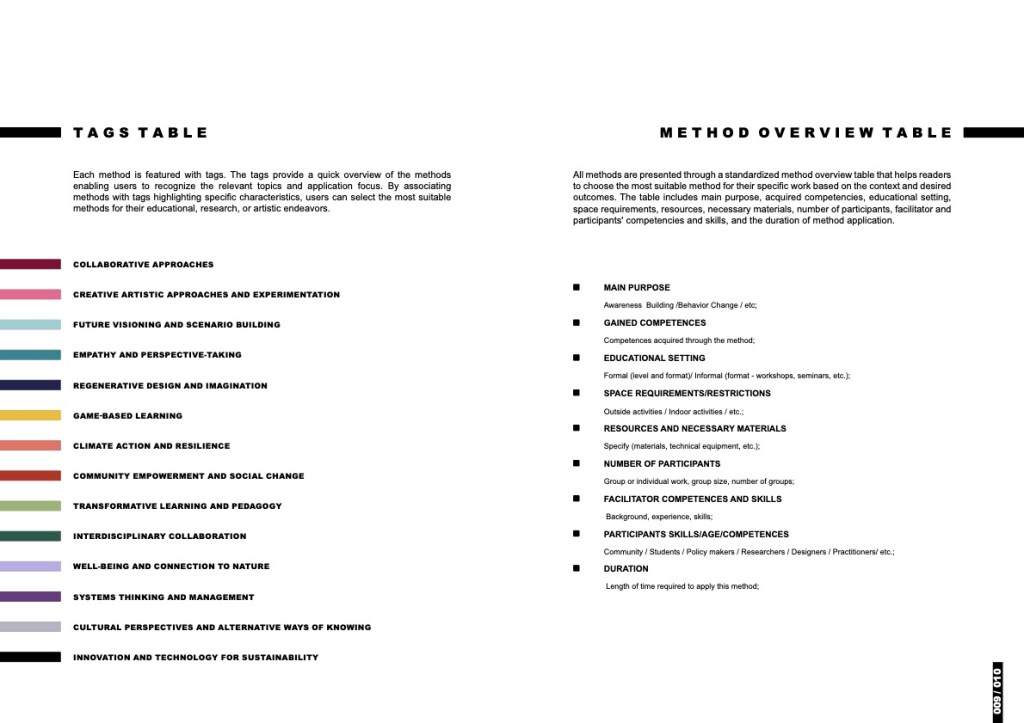
The “Creative Methods Toolkit” is designed as a complementary resource to the Book “Imagining, Designing and Teaching Regenerative Futures – Experiences from around the world” (Bentz, J. & Ristic Trajkovic, J. (Eds.) forthcoming). It introduces a wide range of methods for educational purposes, related to community engagement, regenerative futures, wellbeing, innovation, and transformative learning.
 ART FOR ADAPTATION
You must be logged in to post a comment.